

Maersk Suspends Europe Routes as Hormuz Closure Sends Shockwaves Through Container Shipping
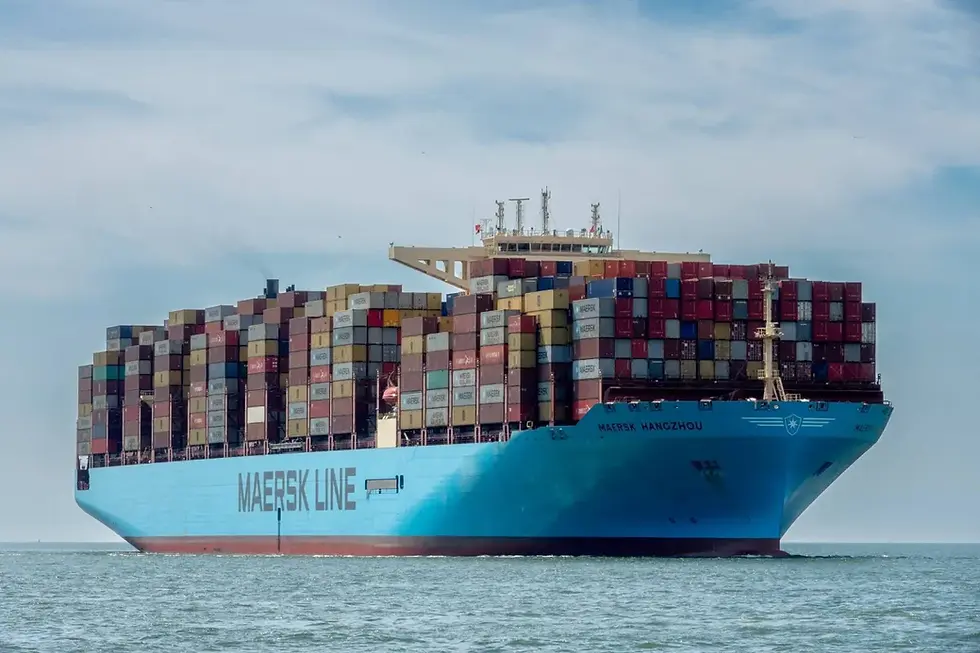
With 147 vessels sheltering in the Gulf, European supply chains brace for the next wave of disruption
The world's largest container shipping group has moved to suspend key trade arteries linking Europe and Asia as the effective closure of the Strait of Hormuz compounds what was already shaping up to be one of the most testing years in recent memory for the maritime industry.
Copenhagen-based Maersk confirmed on March 6 that it was halting two critical services — its FM1 route connecting the Far East to the Middle East, and its ME11 corridor linking the Middle East to Europe — citing the need to protect personnel and vessels amid deteriorating security conditions in the Gulf. The suspension follows a series of progressively tighter operational advisories the Danish group had issued since late February, each one ratcheting up the scale of the disruption facing European importers and exporters dependent on Gulf transit routes.
According to freight analytics firm Xeneta, 147 container ships are currently sheltering in the Gulf, generating severe port congestion and upward pressure on freight rates that is rippling across supply chains from Asia to Northern Europe. Rivals CMA CGM and MSC have similarly paused bookings and rerouted vessels, leaving European shippers scrambling for alternatives.
The timing is particularly brutal. From January 2026, the EU Emissions Trading System reached full compliance for the shipping industry for the first time, meaning carriers now face 100 per cent of their EUA liability — a cost that, for some vessels operating on intra-EU voyages, has come close to matching their underlying bunker bill. The sector had hoped that lower crude prices would offset the regulatory burden. The Hormuz closure has disrupted that calculus entirely.
For European supply chain managers, this is deja vu with an unwelcome twist. The Red Sea disruptions of 2024 had only recently begun to ease when this new crisis erupted — and unlike that episode, the path back to normalcy looks considerably less clear.


Comments