

Dutch Railways Refuses to Drop CAF From €600m Train Order Over West Bank Row
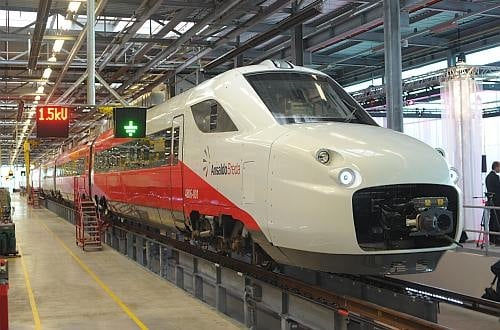
Dutch national operator NS has rejected mounting calls to terminate its €600 million rolling-stock contract with Spanish manufacturer CAF, insisting that European procurement law leaves no room to break the deal on moral grounds, in a case that sharpens the tension between ethical campaigning and the rigid rules governing public contracts.
The controversy centres on CAF's involvement in a light-rail project serving Israeli settlements in the occupied West Bank, which campaigners argue should disqualify the firm from public work in the Netherlands. NS confirmed this week, following closed-door talks with CAF's leadership, that it would proceed with the order in full. A spokesperson said public bodies can exclude suppliers only where a statutory or legal basis exists, and that objections rooted in ethics alone provide no such footing under EU rules.
The contract itself is one of the most significant in the Dutch network's modernisation. Signed in 2022, it covers 60 double-decker Civity trains, split evenly between 30 four-car and 30 six-car units, delivering around 30,000 seats for intercity services that cross the country. The deal, branded the Dubbeldekker Nieuwe Generatie, carries a framework option to expand capacity toward 80,000 seats. Production is under way at CAF's Beasain factory in the Basque Country, with the first units projected to enter passenger service by 2029. The order deepens a relationship stretching back to 2014 that now approaches €1 billion in cumulative value.
The stand-off lands amid broader friction between NS and Brussels. The European Commission warned Amsterdam in July that its rail-capacity allocation rules may breach competition law by favouring the state-owned incumbent over international rivals, a separate dispute that follows an earlier referral of the Netherlands to the European Court of Justice over the direct award of domestic services. The Dutch government is due to decide the shape of its rail market beyond 2033 in early 2027.
For NS, the CAF episode underscores a recurring bind for European state operators: procurement frameworks built to guarantee fairness and value can leave little discretion when political or ethical objections collide with a signed contract.


Comments